Pastry Marks and Finishes
In classic patisserie and hearth baking, every decorative mark has an engineering job. Scoring laminated puff pastry (rayage) keeps hundreds of butter-and-dough layers rising flat, while the exact protein-to-sugar ratio of your brush wash determines whether the finish bakes matte ivory, amber satin, or deep mahogany.
How Surface Scoring Directs Steam Without Rupturing Layers
When puff pastry (pâte feuilletée) or laminated croissant dough bakes, water inside the thin butter sheets flashes into steam, lifting the surrounding gluten membranes upward like a bellows. If the top surface is completely uncut, trapped steam builds pressure unevenly until it blows a jagged hole through one weak side of your Galette des Rois or Pithiviers.
Conversely, if you slice all the way through the top sheet of pastry into the frangipane filling, melted butter and almond cream leak out and glue the edges down. The laboratory rule for pastry rayage is to chill the glazed pastry for 20 minutes at 4°C, then draw the very tip of a curved paring knife or razor lame across the skin using only the weight of the blade—Aiming for a 1.0mm to 1.5mm groove that opens cleanly as the dome expands.
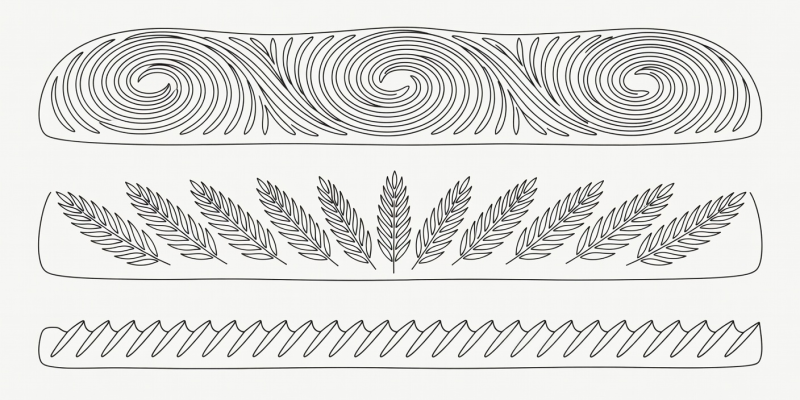
Five Decorative Techniques to Test on Your Next Bake
01. Chiqueter (Back-of-Knife Puff Pastry Edge Sealing)
Never crimp puff pastry rims with a fork or pinch them with warm fingers—crushing the laminated edges welds the layers shut and prevents vertical lift. Instead, hold two fingers on top of the chilled pastry rim and make short, rhythmic 45-degree indentations around the vertical perimeter using the blunt spine of a paring knife spaced 6mm apart.
02. Double-Glazed Rayage (Spiral, Rosette & Fern Motifs)
For razor-sharp contrast on a Pithiviers or Beef Wellington, brush one whisper-thin coat of beaten egg yolk diluted with 10% heavy cream, chill for 20 minutes until tacky, apply a second coat directly in the same brush direction, chill 10 minutes more, and only then score your spiral arcs radiating from a central 4mm steam chimney.
03. Jalousie Slotting & Rotary Lattice Venting
In a classic French Jalousie ("venetian blind" pastry), the top rectangle of puff pastry is folded in half lengthwise and sliced at 1cm intervals with a fluted pastry wheel, stopping 2cm short of the outer border. When unfolded over fruit compote, the slots part during baking like open shutters, venting fruit steam so the crust stays shatteringly crisp.
04. Craquelin Disc Topping for Choux Pastry
Standard cream puffs crack unpredictably as steam inflates the hollow shell. Roll a 2mm sheet of equal parts butter, brown sugar, and flour between parchment sheets, freeze solid, stamp circles matching your piped choux mounds, and set a frozen disc on each mound before baking. The disc melts evenly over the expanding dome, creating a uniform, pebbled crunch.
05. Rice-Flour Stencilling & Alkaline Pretzel Scoring
Dusting a sourdough boule through a laser-cut stencil works only if you use non-gelatinizing rice flour mixed with 15% black cocoa or turmeric for contrast. For Bavarian lye rolls or baked soda pretzels, dipping the skin in a 3.5% alkaline solution gelatinizes exterior starches and accelerates amino-acid browning, turning shallow razor scores into bright white ribbons against a chestnut crust.
Choosing the Exact Wash for Colour and Shine
Proteins drive Maillard browning while lipids and sugars control gloss. Never let egg wash drip down the cut vertical sides of puff pastry—coagulated egg protein acts like superglue across the cut layers and pulls the pastry lopsided.
| Glaze Formula | Active Chemistry | Visual Finish & Texture | Best Application |
|---|---|---|---|
| 1 Egg Yolk + 1 tsp Heavy Cream + pinch salt | High lipid & protein concentration; salt thins albumen strands | Deep burnished gold, mirror gloss, holds crisp score lines | Pithiviers, Galette des Rois, decorative brioche |
| 1 Whole Egg + 1 tbsp Water (strained) | Balanced protein and water dilution | Even amber shine without premature scorching | Croissants, braided Challah, double-crust fruit pies |
| Egg White (lightly whisked) + coarse pearl sugar | Pure albumen protein film, minimal Maillard colour | Crisp, pale translucent sheen; anchors sugar crystals firmly | Sweet shortcrust fruit tarts, puff palmiers, hand pies |
| Heavy Cream or Evaporated Milk | Lactose sugar + milk casein proteins | Soft, matte golden-tan finish with tender crust bite | Scones, rustic galettes, biscuits |
| 1:1 Sugar Syrup (boiled & brushed at oven exit) | Sucrose crystallization suppression | High-gloss wet lacquer; seals moisture inside baked dough | Babka, hot cross buns, fruit Danish pastries |